
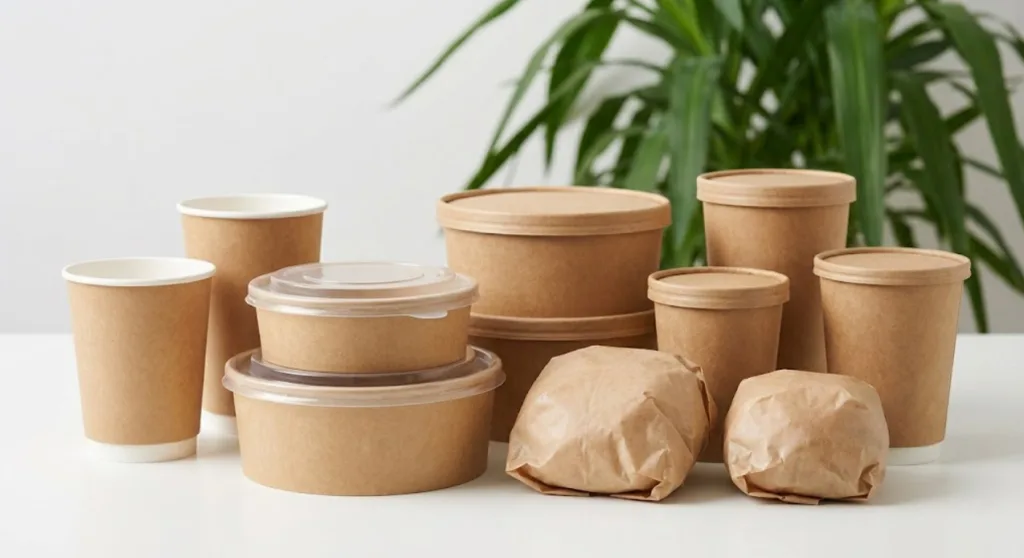
Global plastic restrictions drive the green transition of food-grade paper packaging. Manufacturers now move from conceptual discussions to real industrial execution. Meanwhile, traditional PE coatings and PFAS oil-repellents face strict regulatory bans. These old materials block recycling processes and accumulate in the environment. Therefore, the industry urgently needs a better solution.
Microorganisms synthesize Polyhydroxyalkanoates (PHA). This natural process creates a 100% biobased and fully biodegradable polyester. Consequently, PHA emerges as the ideal barrier coating material. However, its high melting point and viscosity create significant technical hurdles on high-speed water-based coating lines. Thus, engineers must transform raw PHA into a stable aqueous emulsion.
We can categorize the evolution of PHA water-based coating technology into three distinct generations based on technical complexity.
The Three Generations of PHA Water-Based Coating Technology
Generation 1: Simple Physical Dispersion
Underlying Logic & Process: First, we look at simple physical dispersion. Engineers mill PHA resin into micro-level powders (1-10 μm). Next, high-speed shear disperses these powders into an aqueous phase. This liquid contains specific surfactants and dispersants. Ultimately, the process forms a solid-liquid suspension.
Performance Result: After drying, PHA particles merely stack on the paper surface. They do not melt or fuse together. As a result, the process creates a porous, discontinuous film. Therefore, the barrier properties fail to meet standard liquid packaging requirements.
Premise for Improvement: Manufacturers must add a hot-pressing process to improve film formation. This extra step effectively melts and fuses the particles.
Risks & Drawbacks: * First, hot-pressing severely disrupts continuous production efficiency. It slows down line speeds considerably.
Second, factories add high ratios of small-molecule surfactants to maintain suspension stability. This action directly increases the risk of chemical migration into food.
Generation 2: Chemical Modification
Underlying Logic & Process: The second generation chemically modifies the PHA molecular chain. Chemists introduce hydrophilic groups via grafting or block copolymerization. Consequently, this enables self-emulsification and forms stable latex particles (100-500 nm).
Performance Result: These chemically bonded segments allow stable liquid dispersion. During film formation, the latex particles deform and fuse together. Thus, they create a dense, continuous film with excellent barrier properties.
Risks & Drawbacks: * Decreased Bio-content: Introducing petroleum-based segments dilutes the overall biobased carbon content. This dilution compromises the core advantage of PHA. Furthermore, it might negatively affect home compostability certifications.
Compliance Risk: Process chemicals must strictly comply with food contact material regulations. Therefore, comprehensive migration testing remains mandatory. This ensures minimal residual monomers in the final product.
Generation 3: High-Pressure Emulsification
Underlying Logic & Process: This method represents the highest technical demand. High-shear equipment shatters and emulsifies melted PHA under extreme heat and pressure. Consequently, it forms a nano-emulsion (<100 nm) in the aqueous phase. Importantly, this process avoids organic solvents entirely.
Performance Result: Nano-level latex particles yield extreme film density. Thus, the resulting coating is highly uniform and defect-free. Moreover, it offers barrier properties comparable to traditional PE film. It also retains 100% of the PHA bio-content.
Risks & Drawbacks: * High Capital Expenditure: Specialized equipment for melting and high-pressure homogenization costs a lot of money. In addition, it consumes significant energy.
Strict Process Control: Operators must precisely coordinate temperature, pressure, and shear rate. Otherwise, thermal degradation or emulsification failure occurs easily.
Application Value in Food-Grade Paper Packaging
The successful industrialization of PHA water-based coating directly impacts the disposable food packaging sector. Specifically, it upgrades products from “paper + plastic” to an “all-paper” solution.
Single-Use Tableware: PHA coatings perfectly replace traditional PE films. Consequently, paper cups and bowls easily handle high-temperature liquids. They also maintain standard commercial forming speeds.
Food Wrapping Paper: This coating replaces toxic oil-repellents. Therefore, it eliminates PFAS “forever chemicals” at the source for burger wrappers and tray liners.
High-Barrier Packaging: PHA features excellent gas barrier properties. Thus, manufacturers can develop it for packaging coffee, nuts, and snacks. This effectively extends product shelf life.
Sustainability and Lifecycle Efficiency
Furthermore, adopting PHA coatings provides measurable environmental and operational benefits:
True Circularity: PE-coated paper clogs recycling equipment. Conversely, PHA-coated paper allows for over 90% repulping efficiency. This achieves a true closed loop.
Flexible Disposal: Post-use PHA packaging adapts to various waste management systems. These systems include fiber recovery, composting, and natural environment degradation.
Significant Carbon Reduction: Suppliers synthesize PHA from renewable carbon sources like waste cooking oil. Data shows optimized fermentation reduces the lifecycle carbon footprint by 64% compared to HDPE plastics.
Future Outlook
Currently, the industry focuses on process optimization and downstream paper applications. The Third Generation represents the future standard. It offers absolute safety and performance superiority. However, wide-scale adoption faces real hurdles. The industry must solve equipment cost constraints. Furthermore, the supply chain needs a unified global standard and certification system to scale effectively.

