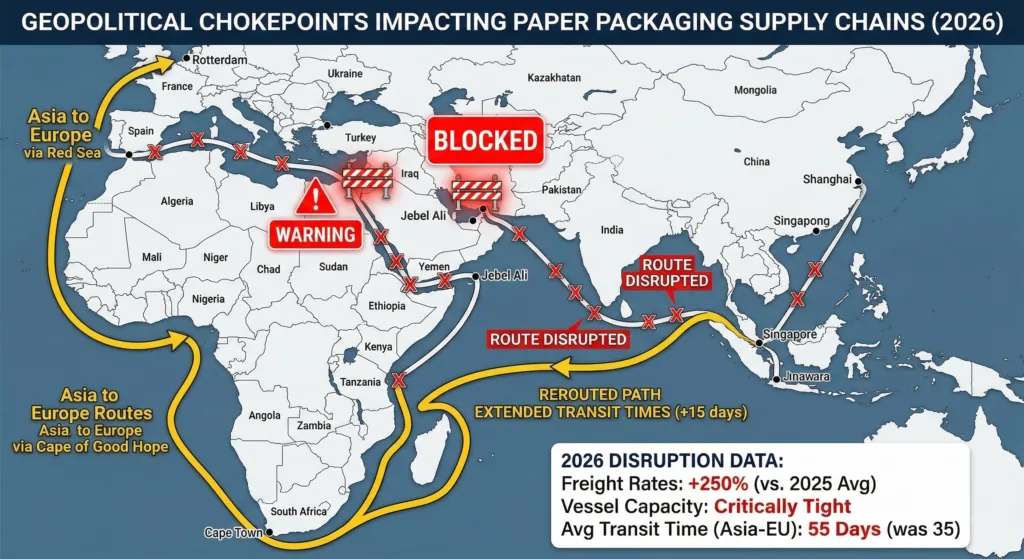
The global supply chain is currently navigating an unprecedented stress test. With the recent escalation of the US-Iran conflict in early 2026 and the effective closure of the Strait of Hormuz, the world is facing a severe dual-chokepoint shipping crisis alongside ongoing Red Sea disruptions.
While mainstream news focuses on crude oil and energy markets, the ripple effects are slamming into downstream manufacturing. For businesses in the food service and sustainable packaging sectors, there is an urgent, emerging challenge: severe disruptions to papermaking chemicals and their cascading effect on the global paper packaging supply.
If your business relies on disposable paper cups, bowls, and eco-friendly food containers, understanding these macroeconomic shifts is no longer optional—it is critical for your survival. Here is a factual, straightforward breakdown of how the current Middle East conflict is impacting the industry and what you can do about it.
The Dual-Chokepoint Crisis: Shipping and Raw Materials
To understand the current threat to paper products, we have to look at the logistics and raw material inputs. The papermaking process is highly chemical-intensive, requiring specific agents for bleaching, sizing, binding, and the critical waterproof coatings used in food-grade products.
Right now, the industry is being hit from two sides:
The Chemical Squeeze: A massive portion of the world’s petrochemicals, sulfur, and methanol originates in or transits through the Middle East. With the Strait of Hormuz effectively blocked, raw materials essential for producing chemical feedstocks (like sulfuric acid, heavily used in paper pulping) have skyrocketed in price.
Soaring Freight Rates: Major ocean carriers have suspended Middle East transit, rerouting vessels around the Cape of Good Hope. This adds weeks to voyage times, consumes excess global vessel capacity, and drives freight and insurance rates to multi-year highs.
How Chemical Shortages Disrupt It?
You might wonder how a blocked strait affects a biodegradable paper food packaging. The answer lies in the coatings and the pulp preparation.
Food-grade paper cups or food containers require specialized, non-toxic chemical barriers (like PLA, aqueous coatings, or PE) to make them grease-resistant and waterproof.
Baseline Cost Inflation: As downstream petrochemical derivatives and vital papermaking chemicals become scarce, the baseline cost of producing high-quality packaging rises sharply. Manufacturers cannot absorb a 30% to 50% spike in chemical inputs without adjusting finished goods pricing.
Production Bottlenecks: Paper mills and packaging plants cannot operate at full capacity if they are waiting on delayed raw material shipments from Asia or the Middle East.
Shrinking Paper Packaging Supply: Slower production and extended ocean transit times mean that the overall availability of finished paper rolls and pre-formed containers is shrinking, leading to market-wide lead time extensions.
| Metric | Pre-Crisis (Normal Operations) | 2026 Dual-Chokepoint Crisis |
| Freight Transit Times (Asia to Europe) | 30–35 days | 45–55+ days (Cape routing) |
| Chemical Input Costs | Stable / Predictable | Highly volatile; double-digit % increases |
| Lead Times for Wholesale Orders | 4–6 weeks | 8–12+ weeks |
| Inventory Strategy | Just-in-Time (Lean) | Buffer Stock / Just-in-Case |
Actionable Steps to Protect Your Inventory
In a volatile global market, stability is your most valuable asset. While the geopolitical landscape remains uncertain, businesses that rely on a steady packaging supply chain must take proactive steps to protect their operations.
-
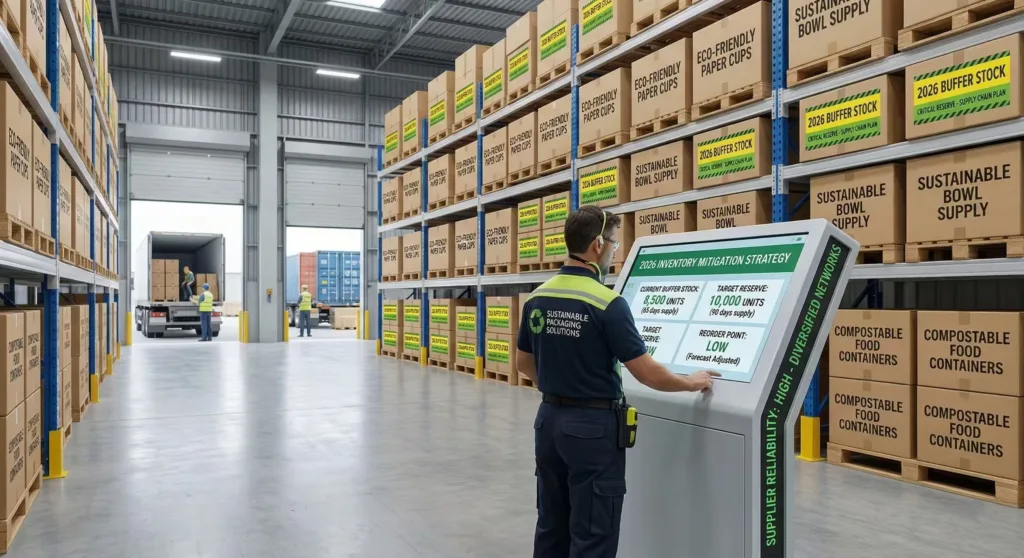
Plan Inventory Ahead: Increase your buffer stock for high-volume items like single-use paper cups and soup bowls to shield your business from sudden shortages.
-
Partner with Resilient Suppliers: Work with packaging manufacturers who have strong, diversified supply chains and deep reserves of raw materials.
-
Stay Committed to Sustainability: Despite short-term cost pressures, consumer demand for eco-friendly and biodegradable food packaging continues to grow. Maintain your commitment to green packaging to protect your brand’s long-term reputation.
Navigating market changes requires reliable partners. By understanding global supply chain dynamics, you can make informed purchasing decisions that keep your business running smoothly, regardless of international headwinds.