
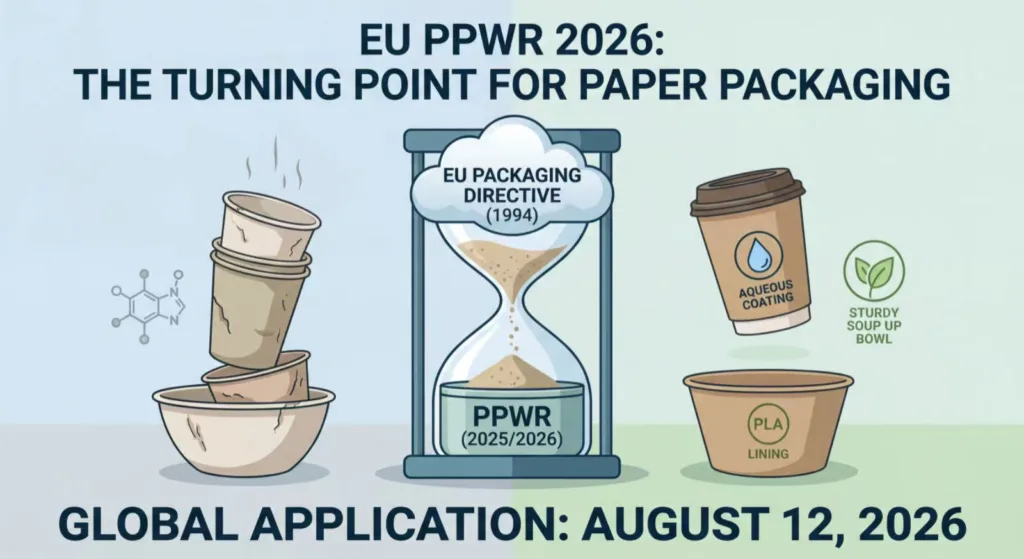
The European Union has officially implemented the Packaging and Packaging Waste Regulation (PPWR). This comprehensive law marks a critical turning point for the global packaging industry. According to the European Commission, the PPWR entered into force on February 11, 2025. It will become fully enforceable across all member states on August 12, 2026. For manufacturers and wholesale buyers of paper cups and food bowls, understanding these new rules is essential for maintaining market access.
Shifting Focus from Waste Management to Source Control
Previously, the EU relied on the 1994 Packaging Directive, which focused mainly on recycling waste after consumer use. The new PPWR establishes stricter rules that cover the entire life cycle of a product. The primary goal is to minimize waste generation, reduce the use of virgin raw materials, and make all packaging on the EU market economically recyclable by the year 2030.
Strict Restrictions on "Forever Chemicals" (PFAS)
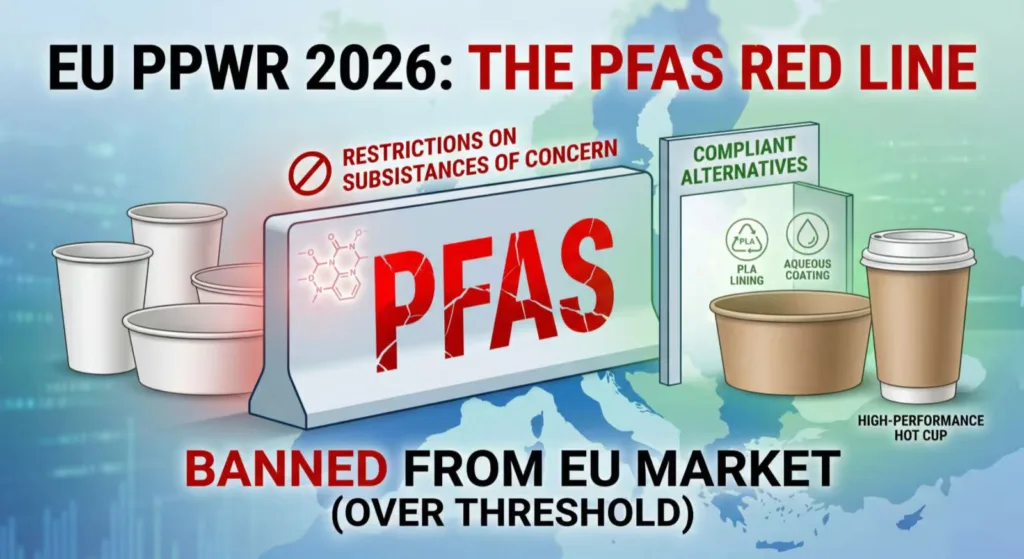
One of the most significant changes for the paper packaging sector is the explicit restriction on chemical substances. The PPWR mandates a strict limit on per- and polyfluoroalkyl substances (PFAS) in food contact materials.
For decades, manufacturers used PFAS to create water and grease barriers inside disposable paper soup bowls and coffee cups. Under the new regulation, packaging that exceeds the permitted PFAS thresholds will be banned from the EU market. This means food service businesses must urgently switch to verified PFAS-free alternatives, such as water-based (aqueous) coatings or plant-based PLA linings, to ensure their paper containers remain legal and safe for consumers.
New Rules for the Takeaway Sector
The PPWR also introduces specific operational rules for restaurants and takeout services. First, businesses must offer customers the option to bring their own reusable containers at no extra cost. Second, the law restricts certain single-use plastics, including individual portion sachets for sauces and condiments.
These rules require food service providers to rethink their daily packaging strategies. Buyers will increasingly seek highly functional, fully compliant paper containers that align directly with these circular economy targets.
Preparing for the 2026 Enforcement Deadline
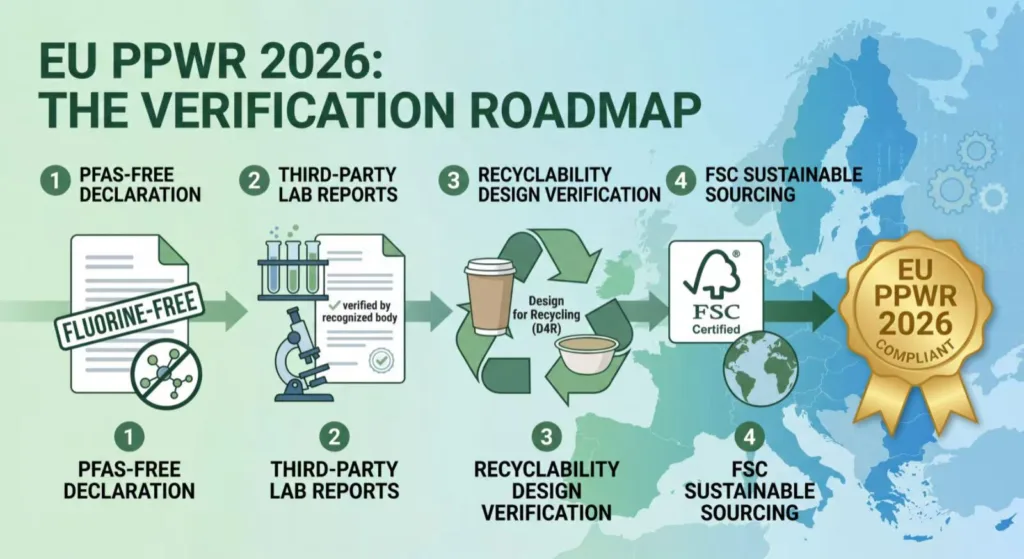
The transition period is brief. By August 2026, all packaging entering the European market must meet the PPWR standards. For businesses importing paper food packaging, the required action is clear. Buyers must demand transparent supply chain data and third-party laboratory reports from their suppliers. These reports must prove that the paper cups and bowls are completely free of restricted chemicals and are designed for high recyclability.
Adapting to the PPWR is not merely a legal obligation; it is a vital step toward long-term business security. By partnering with manufacturers who specialize in compliant, PFAS-free paper packaging, businesses can secure their supply chains and meet the EU’s ambitious environmental goals.

